“If there is a god, it probably wants us to make things.” (An Interview With Jaydra Johnson)
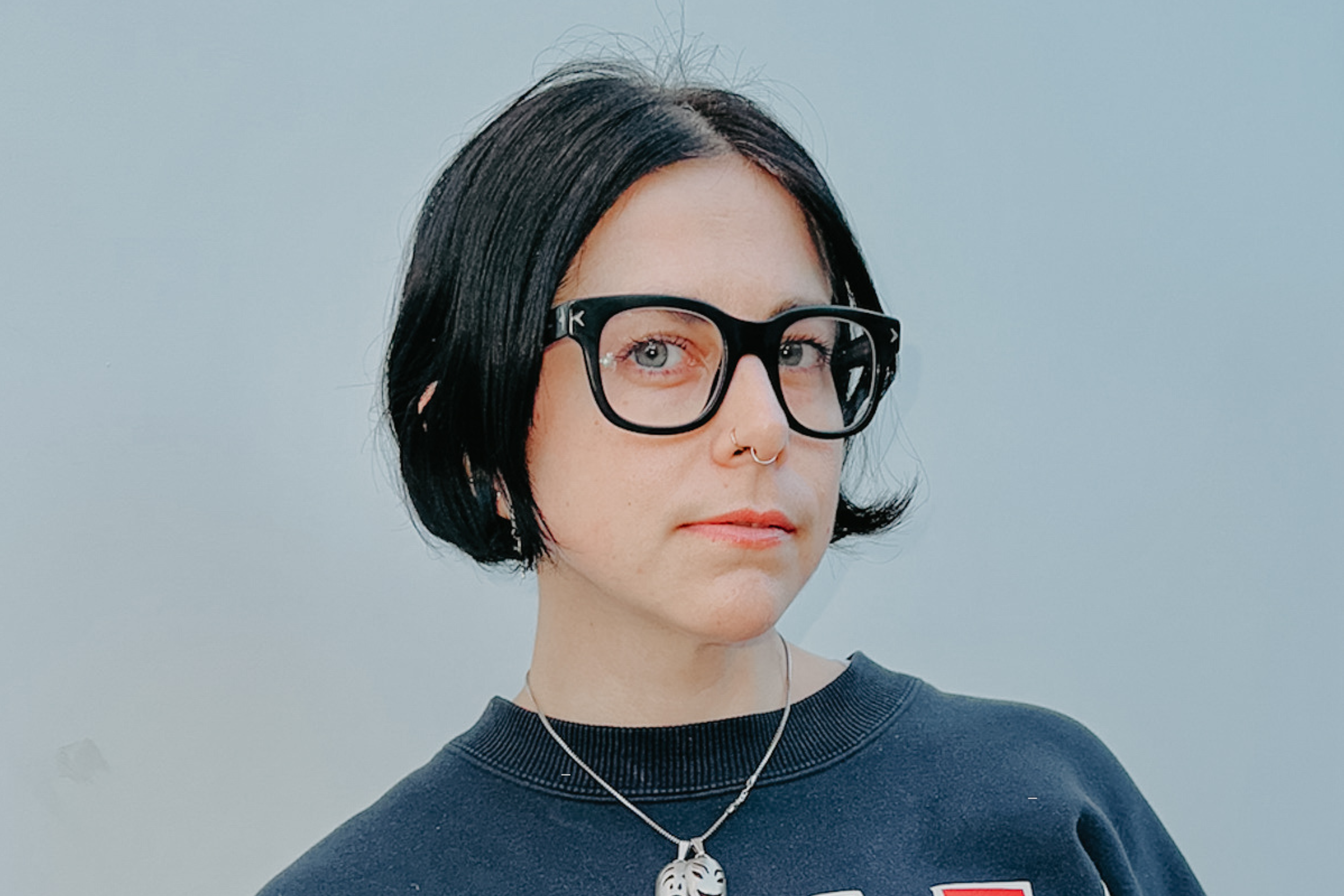
Our featured artist for Opus II, Issue III: Vesper is Jaydra Johnson. A writer, editor, and visual artist based in Portland, OR, Jaydra’s award-winning book Low: Notes on Art and Trash was selected for publication by Maggie Nelson. Find more of her work or get in touch at www.jaydrajohnson.com.
H/M: Opus II, Issue III of Half Mystic Journal highlights the theme of Vesper: an event horizon, a bell tolling in a vacuum, a cicada’s song harsh and generous enough to wear twilight to bone. How did you visually integrate the liminality of this issue’s theme in your Vesper suite?
JJ: I thought a lot about how to be adequately literal in my interpretation of the issue theme while maintaining a level of abstraction. I’m not sure if I succeeded, but I played with qualities like shadow, concealment, and ambiguity as much as possible—even choosing images that were blurry, as if seen through a veil. There’s a lot of vibration in the issue description, as with the bells and cicadas, so I incorporated literal bells while also including images whose patterns looked like the sound waves these objects and creatures might produce. I’ve also been making work for a few years around the idea of a band of sort of demented guardian angels, so I’m accustomed to putting wings on gargoyles and rocks, images that appear frequently in this suite.
Your body of work interrogates the intersection of art and trash as physical refuse, as cultural pejorative, and as class category. Collage feels built for that work, reclaiming and transmuting scraps of diverse materials into something new. What drew you to this medium, and how has working within it impacted your perception of trash?
I started working with collage because it doesn’t require any fine art skill, special equipment, complex supplies, or studio space to get started. Punk, zine culture, and ‘90s MTV informed my early aesthetic sensibility; collages and celebrations of trash are important in those spaces. Over time, I’ve become more concerned with pushing my practice by enlarging the work, making finer cuts, using higher quality source material, and printing final drafts onto unconventional substrates to move off of paper and give the art a more commanding three-dimensional presence. I’m not sure my perception of trash has changed as a result of working with collage (writing my book did, though), but I’ve become more reverential of artists who use discarded or vernacular materials and give them a new, beautiful life.
Let’s talk about that book—Low: Notes on Art and Trash (Fonograf Editions 2024). In many ways, it’s a literary collage: you blend art criticism, personal narrative, and academic research into essays that invite the reader to re-examine what we devalue and discard. You’ve said before that Low evolved over time into a ‘research-based, multidisciplinary project that uses text as its primary medium’. Could you walk us through that evolution?
The initial idea for Low was a book of investigative journalism à la Elizabeth Rush’s Rising, in which I would embed in places where trash was creating conflict. There was a point I was trying to make about the social construction of trash as a material reality and cultural category, and I wanted to test and refine that point by studying the experiences of people surrounded by it. I didn’t particularly want to write about my life—growing up as ‘white trash’ and running from that, but also knowing that running was losing. When the pandemic hit, travel journalism was no longer possible, but I was in my MFA program, and the time had come to write the book. This is when I started writing about myself and my family, and when my research led to local artists working with trash (I lived in New York at the time, home to a ton of trash and a ton of artists—lucky!).
Low is a multidisciplinary project in that it contains collage work, performance art instructions so that readers can process the research through physical rituals, and other conceptual elements. Some of my formal choices felt more like art-making than writing. The performance art instructions evolved from a series of fragmentary experiments between longer essays; I made the collages when I felt writer’s block hitting. Honestly, the book was a scattered mess for a long time! The process of finding its way into the final form was lengthy, about two and a half years of working and reworking.
Your Vesper suite features recurring images of musicians, dancers, statues, and stonework, layered in some cases with text and in others with paper scraps. Tell us about how you sourced the images and text in the pieces. Did the composition process differ from your usual practice?
After receiving the brief for the issue, I began by flipping through material I had on hand: photography magazines, art and architecture books, vintage erotica, and clear sleeves of cuttings from prior projects, sorted by theme. I was searching for anything related to music. The text in the collages is sourced from John Cage’s Silence: Lectures and Writings, a book about experimental music that my boyfriend introduced me to. Later, I travelled to a few reclaimed materials places around town, where I picked up old records and other scraps. The process was similar to what I usually do.
I source most of my paper through eBay and thrift stores because I like the quality of older papers and inks. I always look for black and white editions that have lots of texture in the images. Working in black and white helps my collage work feel less messy, more refined—I was glad this issue called for very little color.
I’ve always been fascinated with John Cage’s composition 4’33”, consisting of four minutes and 33 seconds of silence. The piece encourages listeners to pay close attention to the environmental sounds they take for granted, the sounds that compose ‘silence’. What resonances are there between music and silence? What sounds does silence make around you?
Cage says that what we think of as silence is actually less organized music; you just have to learn how to listen to it. There is a moment he returns to several times in Silence: Lectures and Writings, where he entered a completely silent chamber at NASA. Even in that noiseless place, he could hear a high-pitched and a low-pitched sound. When he came out, the scientists informed him that the higher tone was his nervous system working and the lower was his blood moving. I go through long periods where I don’t listen to music at all, apart from that of my body. I need silence, especially if I’m trying to make work from an egoless place. Absent the organization of sound, I have more nuanced, authentic thoughts.
In English, a vesper is a song signifying nightfall; in Latin, the planet Venus as the evening star. Your collages use silhouettes and negative space to evoke encroaching dusk. When you feel darkness descending, how does your artistic practice illuminate your way forward?
One body of work has helped me out of a dark period—the series of guardian angels that I’ve been working with for a few years. Creating them was shocking and totally thrilling. I watched myself put together something both conceptually interesting and aesthetically pleasing; it was like nothing I’d made before. The positive response from early showings felt genuine, and I then had to find ways to push them into the world. That series is what made me feel like a real artist, because I went through the motions of being a real artist. Also, on a more regular basis, I have a spiritual experience whenever I make work that I know is true. It moves me.
I’d love to hear more about the guardian angel series. How did the project feel different from your other work up to this point? Have these angels been a part of your life for a long time, or are they a recent appearance?
This body of work wasn’t about anything, for one. I wasn’t trying to explain a concept or construct a narrative or even learn something new. The angels were the first time I created my own images, rather than arranging images that already existed. I’d never made figurative art, either. Materially, they were also very different: the original angels are on porcelain tile, not paper, and I later made others UV printed on plexiglass (my take on stained glass) and encased in acrylic. They came to me suddenly a few years ago, so in a way they are recent—but one of my grandmothers was very interested in angels, and I grew up around a lot of new age types. The iconography behind them has been with me for my whole life.
Music lives in every corner of your collages. Dancers are frozen in the midst of performance, their bodies taut, alive, given over to music only they can hear. Trumpeters, violinists, drummers, and guitarists clutch their instruments, filling the pages with the suggestion of their songs. What or who do you hear when you look at these images?
I hear the Western Massachusetts Sacred Harp Convention singers, haunted circus music, a noise set, Gregorian chants, zydeco punk, and silence so loud it hums.
In an interview earlier this year, you said that ‘sex and art are acts of god. Neither should be rushed, forced, or exploited for personal gain. That takes the god out of them’. Where do you feel god in your creative process?
My process involves extensive research. I think I can touch people’s goodness by looking at what they make and listening to what they say. Improbable connections reveal themselves; I learn stuff that’s kind of miraculous. Today I was looking into the primordial ooze theory about how life emerged. We still don’t know how it happened! But there seems to be some intelligent design and ineffable electricity behind all of this, even though plenty about the world is rotten. That’s what I mean by encountering god: loss of the ego, connection, the unknowable, goodness, synchronicity. If there is a god, it probably wants us to make things.
Half of the collages in your Vesper suite feature bells with wings of stone and feathers taking flight into an endless black. The images are surreal, playful, eerie. Where are these creatures headed?
They’re going to Saturnalia, where everything is as it should be: upside down.
This interview, alongside fourteen pieces of art by Jaydra Johnson, is featured in Half Mystic Journal Opus II, Issue III: Vesper, a constellation of contemporary art, lyrics, poetry, and prose dedicated to the celebration of music in all its forms. The vesper issue does not arrive so much as descend: unhurried as smog or sleep paralysis, inevitable as the ouroboros’ endless coil. A shattered mirror multiplies the face of darkness, silence textured and breathing, the body made uncertain of its edges. You’ve been here before, in the dream that returns you always to the same locked room. The door opens only inward. You’ve been knocking all night. Come inside.